
Now Listed at an Adjusted Price
Remax
01923537
Now Listed at an Adjusted Price
Remax
01923537

Yes — but the rules are tighter than they were before January 2024. The City of Big Bear Lake caps vacation rental licenses at 1,500 city-wide under Ordinance 2023-518, limits each owner to two permits maximum, and requires a Bear Valley Fire District inspection before a new license is issued. Applications are processed through GovPilot. Properties in San Bernardino County’s unincorporated area (zip code 92314) follow a separate Short-Term Residential Rental Permit process with different fees and no published license cap. Both jurisdictions require annual renewal and collection of the 15.25% combined TOT and BBLTBID tax.
I get this question constantly from buyers who are looking at Big Bear Lake as an investment — and from out-of-area investors who’ve heard rumors that permits are locked down, the market is closed, and no new STRs are being allowed.
That’s not quite right. But the process is more involved than it was before Ordinance 2023-518 took effect, and there are real limits in place that every investor needs to understand before they close escrow.
Here’s what the permit landscape actually looks like in 2026.
Big Bear Lake has two distinct permitting systems depending on which zip code your property is in — and this distinction matters more than most buyers realize.
92315 — City of Big Bear Lake: Properties within the city limits fall under the City’s Vacation Rental Program, governed by Ord. 2023-518. This is the more regulated system, with a city-wide license cap and the 2-per-owner limit.
92314 — San Bernardino County (unincorporated): Properties outside city limits — including parts of Big Bear City, Sugarloaf, and Fawnskin — are subject to the county’s Short-Term Residential Rental Permit (STRRP) program instead. Different application, different fees, different rules.
When you’re evaluating a property, the zip code tells you which system you’re dealing with. A Moonridge or Boulder Bay cabin is almost certainly in the city. A Sugarloaf or Big Bear City property is likely county. Confirm with the listing before assuming either way.
Ordinance 2023-518 went into effect on January 18, 2024. It was the most significant change to Big Bear’s vacation rental framework in years — and it created the regulatory structure that anyone applying for a new city permit is navigating today.
The city limits the total number of active vacation rental licenses within city limits to 1,500. Once that number is reached, no new licenses are issued until existing licenses lapse or are not renewed. As of early 2026, the city hasn’t officially announced that the cap has been hit — but the number of active licenses has grown steadily. If you’re planning to apply for a new permit, contact the Vacation Rental Program office directly to confirm current availability before you close.
Phone: (909) 866-5831 x116
Each individual owner may hold a maximum of two vacation rental licenses within the city. The ordinance specifically closes the entity workaround: you can’t place properties in separate LLCs, trusts, or corporate entities to get around this limit. The city looks at beneficial ownership, not just the name on the deed.
If you already own two permitted vacation rentals within city limits and want a third, you have a problem the ordinance doesn’t solve — other than buying in the county instead.
New license applications require a fire safety inspection by the Bear Valley Fire Protection District. This covers standard fire safety equipment — smoke detectors, carbon monoxide detectors, fire extinguishers — as well as exterior compliance requirements like defensible space under California PRC Section 4291. Properties in high fire hazard severity zones (most of Big Bear qualifies) need to meet brush clearance standards before an inspection passes.
Budget time for this. If your property has deferred exterior maintenance or hasn’t had fire clearance work done recently, you may need to complete that before the inspection before the license application moves forward.
Applications are submitted through GovPilot, the city’s online permitting portal. You’ll need proof of ownership, documentation of all beneficial owners if the property is held in an entity, and proof of current liability insurance covering vacation rental use.
The fee runs $550–$675 depending on the property and application type. Processing typically takes around four weeks from the time the application is complete — meaning all required inspections passed and all documents submitted. Annual renewal is required; the city sends a reminder 45 days before expiration.
You can access the application and owner/agent certification exam at the city’s GovPilot portal: bigbearlake.gov.
If your property is in San Bernardino County’s unincorporated area (zip code 92314), you’re dealing with the county’s Short-Term Residential Rental Permit program, not the city’s.
As of mid-2026, the county has not published a license cap equivalent to the city’s 1,500-unit limit. The permit fee is $667, and the inspection is exterior rather than the full fire inspection required by the city. The county program has its own set of operational requirements, and enforcement is handled separately from the city’s compliance team.
Properties in Sugarloaf, Big Bear City, and parts of Fawnskin often fall under county jurisdiction. If you’re specifically looking for a property where the permit competition might be lower or the process somewhat less restrictive, the county area is worth exploring — though verify current county requirements directly before relying on any specific detail here, as county rules can update independently of the city’s program.
Whatever jurisdiction you’re in, every Big Bear Lake vacation rental operator owes Transient Occupancy Tax. Within city limits, that’s currently 14% TOT plus 1.25% BBLTBID (Big Bear Lake Tourism Business Improvement District), for a combined rate of 15.25% of gross rental revenue.
This is collected from guests and remitted to the city monthly. Platforms like Airbnb and VRBO collect and remit TOT on your behalf for stays booked through their platforms in most cases — but if you take any direct bookings, that obligation falls on you personally. Failure to remit is a compliance violation that can result in fines and jeopardize your license renewal.
When you’re modeling the investment math on a Big Bear property, build 15.25% into your revenue baseline. It’s not optional, it’s not negotiable, and it’s higher than the rate in many comparable mountain markets.
If you’re buying a property that already has an active vacation rental license, there are a few things to verify in due diligence that your agent should be helping you track down.
The vacation rental license under Ord. 2023-518 is non-transferable. When a property sells, the license does not convey to the new owner. The buyer has to apply for a new license — which means they’re subject to the 1,500-cap check, the fire inspection, and the full application process. This is a material fact that can affect whether the investment pencils out, and it should be disclosed and verified before you make an offer, not after.
Also verify the property’s fire compliance status. If the inspection will be required on your new application, knowing whether the property already meets defensible space standards saves you from unexpected costs post-close.
Already have a good handle on the permit situation and working through what the full investment looks like? Check out What to Look for When Buying a Vacation Rental in Big Bear Lake for the full buyer’s lens on STR acquisitions.

As of early 2026, the city has not publicly announced that the cap has been reached, but the number of active licenses has grown steadily since Ord. 2023-518 took effect in January 2024. The only way to confirm current availability is to contact the City’s Vacation Rental Program office directly at (909) 866-5831 x116 before you close escrow on a property where permit availability is part of your investment thesis.
Yes. Ordinance 2023-518 specifically addresses beneficial ownership – not just the name on the deed. You can’t place multiple properties in separate LLCs or trusts to work around the two-license limit. The city evaluates who actually owns and controls the entity, and the 2-permit cap applies per individual beneficial owner regardless of how the property is titled.
No. Under Ord. 2023-518, vacation rental licenses in the City of Big Bear Lake are non-transferable. When the property sells, the license does not convey to the buyer. The new owner must apply for a fresh license, go through the fire inspection, and be subject to the current cap count. This is a critical due diligence point – if the cap is full when you close, the investment may not be feasible as a short-term rental.
The combined rate is 15.25% – 14% Transient Occupancy Tax plus 1.25% Big Bear Lake Tourism Business Improvement District (BBLTBID) assessment. It applies to all gross rental revenue from stays of 30 days or less. Platforms like Airbnb and VRBO typically collect and remit TOT for bookings made through their systems. For direct bookings, the operator is responsible for collecting from the guest and remitting to the city monthly.
City permits (for zip code 92315) fall under Ord. 2023-518, with a 1,500-license cap, a 2-per-owner limit, a Bear Valley Fire District inspection, and a $550-$675 fee. County permits (for zip code 92314 – Big Bear City, Sugarloaf, parts of Fawnskin) fall under San Bernardino County’s Short-Term Residential Rental Permit program – no published cap as of mid-2026, $667 fee, exterior inspection. Both jurisdictions require annual renewal and compliance with their respective operational rules.
Vacation rental investing in Big Bear Lake still works – the market produces strong rental income, demand is consistent year-round, and properties in the right neighborhoods hold their value. But the permit is no longer a formality. It’s a gated process with a cap, a fire inspection, and non-transferability built in.
If you’re evaluating a property as an STR investment, I walk every buyer through the permit status, the fire compliance picture, and the realistic revenue math before we write an offer. You want to know that information before you’re in escrow, not after.
Call or text me anytime at 909.744.2190, or reach me through buyinbigbearlake.com. Happy to walk through any specific property with you.
This post is for informational purposes only. Vacation rental ordinance requirements, permit caps, fees, and availability change. Verify current requirements directly with the City of Big Bear Lake Vacation Rental Program at (909) 866-5831 x116 or San Bernardino County before making investment decisions. Rachael Smith-Meadors is a licensed California Real Estate Broker Associate and does not provide legal or permitting advice.
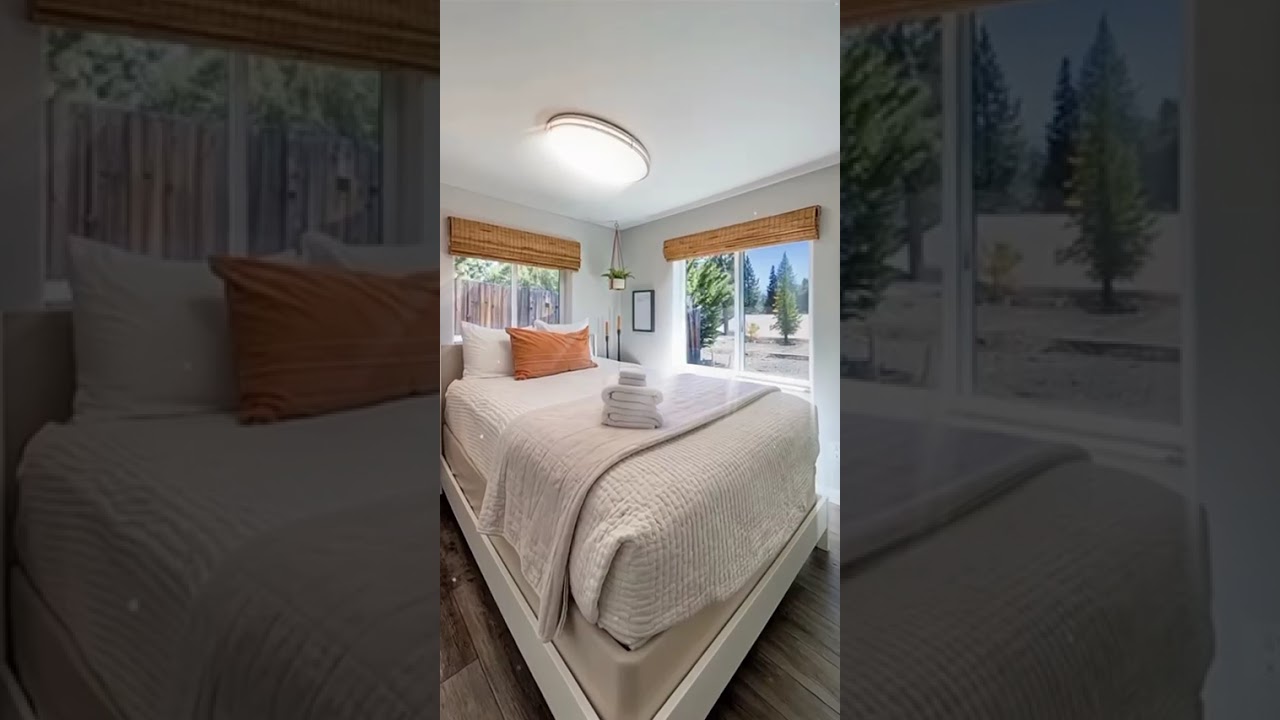
A price reduction at 39470 North Shore Drive puts a lakeside-adjacent Big Bear Lake property within reach of buyers who were previously priced out. Located near the water, marinas, and some of the area’s best views, a price improvement in this corridor creates a real window — especially for buyers eyeing short-term rental income or a second home with strong appreciation potential. In a market where well-positioned inventory moves fast, this kind of drop is worth acting on now.
By Rachael Smith | May 15, 2026
Price drops in Big Bear Lake don’t happen in a vacuum. When a seller reduces the price on a North Shore Drive property, it signals something worth paying attention to — and if you’re a buyer who’s been waiting for the right moment to get into this market, that moment may have just arrived.
I shared a quick look at 39470 North Shore Drive on my YouTube channel this week. It’s a short clip, but it tells you what you need to know about the location and the opportunity. Take a look:
Not all Big Bear Lake addresses carry the same weight. North Shore Drive is one of those corridors that consistently draws buyers for good reason.
The north side of the lake runs along State Highway 38, giving you direct access to the water, public boat launches, marina facilities, and some of the clearest sight lines across the lake to the San Bernardino Mountains. Properties on this stretch tend to feel more connected to the outdoor lifestyle that makes Big Bear worth owning in — whether you’re kayaking in summer, snowshoeing in winter, or just sitting on the deck watching the light change over the water.
For short-term rental investors, North Shore is a known producer. Guests who search for Big Bear cabins often filter specifically for lake proximity and water views. A property that delivers on both — even if it’s not directly on the shore — can command strong nightly rates and maintain high occupancy across multiple seasons. That’s the demand story behind why a price drop here creates immediate interest from investors who know the market.
For second-home buyers, the appeal is simpler: you’re buying a place you’ll actually want to use. Proximity to the lake and marinas means spontaneous afternoons on the water and easy access to everything Big Bear offers year-round.
Sellers don’t reduce their price without reason. But the reason matters — and in Big Bear, it’s rarely about the property itself. It’s more often about timing, initial overpricing, or a seller who needs to move faster than the market was moving for them.
When a well-located home on a corridor like North Shore Drive takes a price reduction, the calculation for buyers shifts. Here’s what I watch for when evaluating whether a price drop represents real value:
If you’ve been watching the Big Bear market and waiting for a signal, a North Shore price reduction is one worth taking seriously. Similar value-add opportunities on this corridor don’t stay available long. I recently covered another just-reduced listing in Big Bear City that shows how fast these windows close once word gets out.
Want more Big Bear real estate insights like this? Every week I break down new listings, price changes, and market shifts so you know exactly where the opportunities are before they disappear. Subscribe to my YouTube channel so you never miss an update.
A price drop can create urgency — and urgency can lead to skipping steps that matter. Here’s what I walk every buyer through before we put pen to paper on a mountain property like this.
Get the disclosure package first. Big Bear Lake properties come with disclosures specific to mountain living — snow load ratings, fire clearance requirements, HOA rules if applicable, and septic or well status. Before you fall in love with the price, know what you’re taking on. I wrote a full breakdown of what Big Bear buyers need to know about mountain disclosures — it’s worth reading before you tour.
Understand the STR picture before you underwrite. If short-term rental income is part of your plan, verify the city’s current permitting status for the specific parcel. Big Bear Lake has been active in managing STR density in certain neighborhoods, and what worked for a neighbor’s property may not apply to the one you’re buying.
Come in with financing ready. Price-drop properties in desirable locations attract cash buyers and pre-approved buyers moving fast. If you need to get pre-approval squared away, do it now — not after you’ve toured. I can connect you with lenders who know mountain property financing if you need a starting point.
Don’t assume the seller has flexibility just because they dropped the price. A price reduction often means the seller is motivated — but it doesn’t always mean they’ll entertain a low offer. In some cases, the reduced price is already the seller’s final number. Your offer strategy matters as much as the price itself.
If you want to know what I’d do with this specific property — whether I’d go in at asking, below, or walk away entirely — that’s a conversation worth having before you tour. The details on 39470 North Shore Drive tell a story that the listing price alone doesn’t capture.
Price drops in Big Bear Lake don’t last. If this property is on your radar, reach out directly. You can call or text me at 909.744.2190, or email rachaelsmithrealestate@gmail.com to schedule a private showing or get the full disclosure package before it hits the open market.
Every week on my YouTube channel, I walk through new listings, price changes, and market shifts across the Big Bear Lake area — the kind of ground-level perspective you can’t get from a Zillow listing. Subscribe here so you’re always the first to know when an opportunity like this surfaces.
About Rachael Smith
Rachael Smith is a top-producing real estate agent with RE/MAX Big Bear, specializing in mountain homes, short-term rental investments, and luxury properties in Big Bear Lake and surrounding areas. With over a decade of experience and hundreds of homes sold, she helps buyers, sellers, and investors make smart, strategic real estate decisions. Through her strong online presence and data-driven approach, Rachael connects clients with opportunities both on and off the market.

New Lower Price Available
Remax
01923537
If you’re selling a vacation home, second home, or short-term rental in Big Bear Lake, you almost certainly owe capital gains tax on your profit — and you likely cannot use the $250,000 (or $500,000) primary residence exclusion that most California sellers rely on. California taxes capital gains as ordinary income at rates up to 13.3%, stacked on top of federal rates up to 20%, meaning your effective rate on gains can reach 30%–33%. California also requires your escrow to withhold 3.33% of your gross sale price at closing unless you file Form 593.
Most sellers who call me about listing their Big Bear Lake property have done some rough math. They know what they paid, they know what comparable properties are selling for, and they have a number in their head — their expected profit.
Then their accountant calls.
The conversation that follows is almost always a surprise. Because Big Bear is a vacation home and investment property market, most sellers here face a tax bill that primary-residence sellers in other markets never have to worry about. Understanding that bill before you list — not after — can change how you price, when you close, and whether a different strategy might be smarter than a straight sale.
Here’s what you actually need to know.
When you sell a primary residence, the IRS gives you a significant break: up to $250,000 of capital gains excluded from federal tax if you’re single, $500,000 if you’re married filing jointly. California mirrors this exclusion exactly. It’s called the Section 121 exclusion, and for most homeowners selling the house they live in, it eliminates or dramatically reduces their tax bill.
To qualify, you have to have owned the home and lived in it as your primary residence for at least two of the five years before you sell. Not visited it. Not rented it part of the year. Lived in it — as your main home.
If your Big Bear property has been a vacation cabin, an Airbnb, a VRBO, or a second home you stayed in a few weekends a year, it doesn’t qualify. You’ve been paying property taxes on it, maintaining it, maybe running a rental business out of it — but it’s not your primary residence, and the exclusion doesn’t apply.
The “I’ll just move in” workaround is more complicated than it sounds. Some sellers think they can convert their vacation home to a primary residence, live there for two years, and then sell with the full exclusion. That strategy can work — but it’s not a clean fix. Any period the property was used as a rental or personal vacation home before you moved in is called “nonqualified use,” and it reduces your exclusion proportionally. If you owned the cabin for eight years as a vacation rental and then lived in it for two years before selling, your exclusion is reduced by roughly 8/10. You might exclude $50,000 instead of $500,000. Talk to a CPA before assuming this approach pays off in your situation.
If the primary residence exclusion doesn’t apply, your full gain is taxable. Here’s how the layers stack.
For properties held more than one year, the federal rates are 0%, 15%, or 20%, depending on your total taxable income in the year of the sale. Most working adults selling a Big Bear property fall in the 15% bracket. Higher earners — those with income above roughly $553,000 for single filers in 2026 — pay 20%. If you’ve owned the property less than a year, gains are taxed as ordinary income, which is almost always worse.
This is where California sellers get hit harder than most. California doesn’t have a preferential capital gains rate. Your gain is taxed as ordinary income, at the same brackets as your paycheck — from 1% up to 13.3% for the highest earners. California has the highest top marginal capital gains rate of any state in the country.
For a California resident already earning solid income from their career or business, adding a large capital gain on top often pushes them into the 9.3%–13.3% state bracket.
A seller in the 15% federal bracket paying 9.3% California faces a combined effective rate of roughly 24% on every dollar of gain. A higher-income seller at 20% federal plus 13.3% California pays about 33%.
Real example: You bought a Moonridge cabin in 2017 for $450,000. You’re selling in 2026 for $850,000. Your basic gain — simplified, before accounting for improvements and selling costs — is $400,000.
At a 24% combined rate: approximately $96,000 in taxes.
At a 33% combined rate: approximately $132,000 in taxes.
That’s the number your accountant is calling about.
If you’ve been renting your Big Bear property and claiming depreciation deductions on your taxes — which your accountant likely suggested — you’ll owe depreciation recapture tax when you sell. The federal recapture rate on residential rental property is up to 25%, applied to all the depreciation you took (or were allowed to take) during ownership. The IRS requires you to pay it on the amount you were “allowed or allowable” to claim, even if you never actually took the deduction.
California adds its ordinary income rate on top of that. If you depreciated $70,000 over your ownership period, you could face $25,000+ in recapture tax at the federal level alone, plus another $6,500–$9,300 in California state tax on that same amount.
California doesn’t wait until you file your taxes to collect. When you close a real estate transaction in California, the escrow company is required to withhold 3.33% of your gross sale price — not your gain, your gross price — and send it to the Franchise Tax Board. On an $800,000 sale, that’s $26,640 withheld from your proceeds at closing.
You’ll eventually get back any overpayment when you file your California tax return. But that’s months away, and in the meantime, you have $26,000 less to work with than you planned.
There’s an alternative. You or your CPA can elect a different withholding method on Form 593 — calculating withholding based on 12.3% of your estimated gain rather than 3.33% of the gross price. If your gain is small relative to the sale price (say, because you made substantial improvements), the alternative method often results in lower withholding at closing.
Your escrow officer handles Form 593 as part of the transaction. Tell them — and your CPA — which method to apply before closing, not after. If your sale qualifies for the primary residence exclusion, you certify that on Form 593 and no withholding is required at all. But as we’ve covered: most Big Bear sellers can’t claim that exemption.
Tax strategy is your CPA’s territory, not mine. But here’s what your options generally look like — and which ones are most relevant to Big Bear sellers.
If your Big Bear property was used primarily as a rental — rented at fair market rates for at least 14 days per year, with your personal use kept to 14 days or 10% of rental days, whichever is greater — it may qualify for a 1031 like-kind exchange under IRS Revenue Procedure 2008-16. A 1031 exchange lets you defer all capital gains and depreciation recapture by rolling your full proceeds into a replacement investment property. The deferred tax isn’t forgiven — it carries over — but if you keep exchanging, you can defer indefinitely, and your heirs may receive a stepped-up basis that eliminates the tax entirely.
The timelines are strict: you have 45 days after closing to identify replacement properties, and 180 days to close on one. A qualified intermediary must be set up before your sale closes — you can’t backtrack into a 1031 once escrow has opened. This is the most powerful tool available to Big Bear STR owners who want to exit without an immediate tax bill.
Note that California’s Assembly Bill 1611, effective for sales completed after January 1, 2026, restricts 1031 exchanges for corporations owning 50 or more single-family homes. Individual investors are not affected.
Instead of receiving the full purchase price at closing, you take payment over several years. This spreads your recognized gain across multiple tax years, potentially keeping you in a lower bracket each year. It requires the buyer to agree to it, and you’ll earn interest on the unpaid balance — but for sellers who don’t need all the cash immediately, it can meaningfully reduce the overall tax burden.
If you expect your income to drop significantly in a future tax year — retirement, a business transition, a sabbatical — selling in that year could reduce your California rate on the gain. Even dropping one California bracket (say, from 13.3% to 9.3%) on a $400,000 gain saves $16,000. This requires advance planning but it’s one of the simplest legal strategies available.
If you’re genuinely willing to move to Big Bear full-time for two or more years, the conversion strategy can work — just not as cleanly as most sellers assume. Model the math with your CPA before committing, specifically looking at how the nonqualified use period reduces your actual exclusion. In some cases the tax savings justify the move. In others, the math doesn’t hold up.
Already thinking through your full seller net? Our breakdown of How Much Does It Cost to Sell a Home in Big Bear Lake covers the full picture of closing costs, commissions, and transfer taxes — so you can layer in your tax estimate and see what you’ll actually take home after everything.
The number that matters isn’t your sale price. It’s what’s left after taxes, after closing costs, and after the escrow company has done its job. Knowing that number before you list is what separates a confident decision from an unpleasant surprise in April.
Only if you’ve used it as your primary residence — where you actually live, file taxes, and spend the majority of your time — for at least two of the five years before you sell. If your Big Bear property has been a vacation cabin, second home, or short-term rental, it doesn’t qualify for the Section 121 exclusion. Even converting it to a primary residence and living there two years before selling won’t give you the full exclusion, because the prior vacation or rental use (“nonqualified use”) reduces the amount you can exclude proportionally.
California doesn’t have a separate capital gains rate — it taxes all capital gains as ordinary income at the same brackets as your regular earnings, from 1% up to 13.3%. That means if you’re already earning a solid income, your Big Bear gain is likely taxed at 9.3%, 10.3%, or 13.3% at the state level. Add federal long-term capital gains rates of 15% or 20%, and your combined effective rate on a Big Bear home sale can range from 24% to 33%.
Form 593 is California’s real estate withholding form. Your escrow company is required to withhold 3.33% of the gross sale price and send it to the California Franchise Tax Board at closing unless you certify an exemption or elect an alternative calculation. On an $800,000 sale, that’s about $26,640 withheld from your proceeds at closing. If you overpay, you get a refund when you file your state taxes — but it affects your cash flow immediately. Make sure you and your CPA tell your escrow officer how to handle Form 593 before closing day.
Potentially yes — but the IRS has specific requirements. Under Revenue Procedure 2008-16, a vacation rental property can qualify for a 1031 exchange if you’ve held it for at least 24 months, rented it at fair market rates for at least 14 days per year, and kept your personal use below 14 days or 10% of the days rented. If your Big Bear STR meets those tests, you can defer both capital gains and depreciation recapture by rolling your proceeds into a replacement investment property within the 45-day identification and 180-day closing windows. A qualified intermediary must be in place before your sale closes.
Yes. The federal depreciation recapture rate on residential rental property is up to 25%, applied to all depreciation you claimed (or were allowed to claim) during ownership. California then taxes that recaptured amount as ordinary income at your state bracket — potentially adding another 9% to 13.3%. If you’ve owned your Big Bear STR for several years and claimed depreciation each year, the recapture amount can be significant. It’s one more reason to model your full tax exposure with a CPA before you commit to a sale price.
The sale price on your Big Bear Lake home is just the starting point. Between California’s withholding at closing, the capital gains tax bill that follows, and any depreciation recapture on your STR, the difference between what you think you’ll net and what you actually take home can be tens of thousands of dollars.
That’s not a reason not to sell — it’s a reason to plan. Know your tax exposure before you set your price, before you evaluate offers, and before you sign anything. Your CPA handles the tax calculation. I give you the market side: what your property is realistically worth right now, what buyers are offering, and how your proceeds stack up against your goals.
Call or text me anytime at 909.744.2190, or reach me through buyinbigbearlake.com. I’m happy to walk through the numbers with you before you make any decisions.
This post is for informational purposes only and does not constitute tax, legal, or financial advice. California tax law and federal tax law are complex and subject to change. Consult a licensed CPA or tax attorney for advice specific to your situation before making any decisions about the sale of real property. Rachael Smith-Meadors is a licensed California Real Estate Broker Associate and does not provide tax advice.
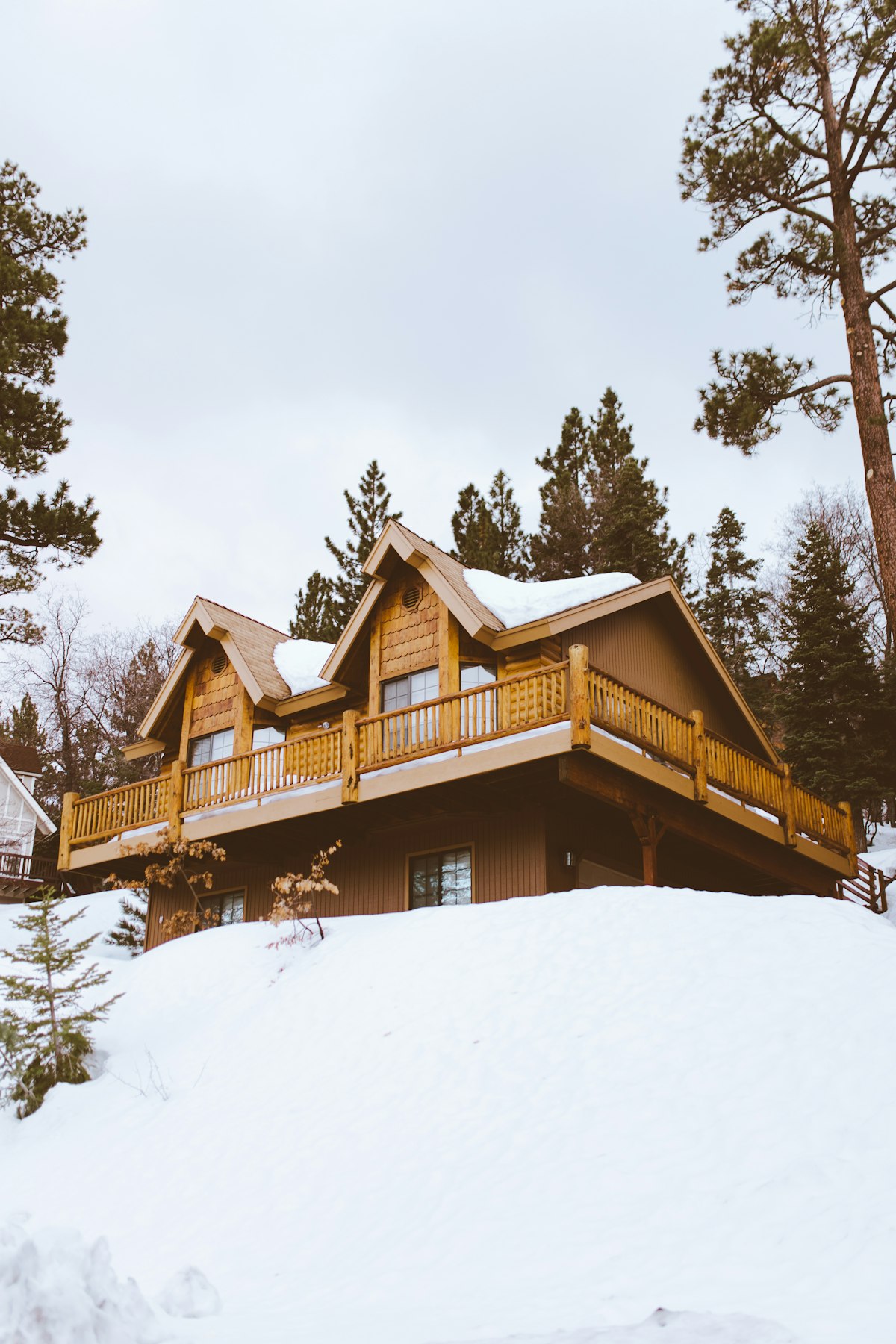
Big Bear Lake sits at 6,752 feet, where homes must be engineered to support a roof snow load of 100 pounds per square foot. Before closing on a mountain property, buyers should verify structural compliance, check for unpermitted additions built to insufficient load specs, confirm fire clearance documentation under California PRC 4291, and understand how the 2026 building code changes affect renovation costs. These aren’t abstract risks — they’re the most common surprises buyers discover after the keys change hands.

When you buy a home in the San Gabriel Valley or Orange County, you’re thinking about price, location, and maybe the commute. Snow load is not on the list.
In Big Bear Lake, it should be near the top.
You’re buying at 6,752 feet above sea level, in a market where an average year brings 100 or more inches of snow and a heavy year — like 2023 — can deliver 200 inches or more. That weight doesn’t slide off a cabin roof on its own. It accumulates, drifts against walls, and sits on eaves and ridgelines. If the structure wasn’t built or maintained to the right standard, it creates problems that can cost tens of thousands of dollars to fix — problems that a standard home inspection may not fully surface.
Here’s what you need to understand before you write an offer on a Big Bear Lake property.
The City of Big Bear Lake requires homes to be designed for a roof snow load of 100 pounds per square foot (psf). That’s the engineering benchmark governing how a roof structure is built — the beams, the rafters, the ridge line, the connection points throughout.
One hundred psf is not a small number. A typical Southern California flat-land home is designed for 20 psf or less. Big Bear’s requirement is five times that. That gap exists because it has to. But it also means that any structure not built to spec — or any addition built without the right permits — may be carrying far more load than it was designed to handle.
What you’re looking for in the inspection:
A general home inspector can identify obvious structural problems. For a mountain property, ask the inspector directly about their Big Bear-specific experience and whether they’re prepared to assess snow load compliance. If there are any signs of deflection or structural stress, a structural engineer review is money well spent — and far cheaper than discovering a problem after close.

Here’s something that matters if you plan to renovate or expand whatever you buy: the City of Big Bear Lake adopted the 2025 California Building Standards Code, effective January 1, 2026. One of the most significant changes is a major increase in snow load design values — in some cases potentially doubling previous structural load requirements.
What that means practically: any permitted addition, deck, room expansion, garage modification, or structural project must now be designed to meet the new, higher load standards. The City has noted that these changes could add meaningful cost to mountain construction — larger shear walls, deeper beams, and potentially steel framing for longer spans of 30 to 40 feet or more.
This isn’t a reason to avoid a property with renovation potential. It is a reason to get a contractor and structural engineer into a conversation before you finalize your renovation assumptions. The construction budget you’d have estimated two years ago won’t hold under the new code.
Practical step: If the property has a feature you plan to modify — an old deck, a garage you want to convert, a loft you want to expand — ask your agent to confirm whether that feature has a current permit. Contact the City of Big Bear Lake Building & Safety Division at (909) 866-5831 to pull the permit history before you remove contingencies.
Unpermitted additions are common everywhere in California. In Big Bear Lake, they carry a different level of risk.
Many of the cabins in Big Bear were built decades ago as simple weekend getaways — small footprints, straightforward structures. Over the years, owners added lofts, enclosed decks, garage conversions, second sleeping levels, and expanded kitchens. Often without permits. In the flatlands, unpermitted work creates escrow headaches. In a market with a 100 psf snow load requirement, unpermitted work can mean a structure that was never verified to handle the loads it’s actually been subject to.
If a previous owner framed in a second-floor loft in the 1980s without a permit, no one ever confirmed the floor joists could handle the additional dead and live load. That loft has been carrying weight — and seasonal snow stress on the original structure — for 40 years.
What to do in escrow: Request a permit history from the City of Big Bear Lake Building & Safety Division before you remove your inspection contingency. It’s a straightforward step that too many buyers skip. If the physical property includes additions or modifications that don’t appear in the permit record, your agent needs to address that with the seller — either as a credit, a repair obligation, or a retroactive permit process before close.
Big Bear Lake falls within California’s State Responsibility Area (SRA) and carries a Very High Fire Hazard Severity Zone designation. Under California Public Resources Code Section 4291 (PRC 4291), every structure in the SRA must maintain 100 feet of defensible space from all sides of the home — or to the property line when the lot is smaller than 100 feet in any direction.
Here’s how it directly affects your transaction: California law requires sellers in the SRA to provide buyers with documentation of defensible space compliance dated within six months of close of escrow. Bear Valley Fire Protection District conducts these inspections locally. The seller is responsible for ordering the inspection and clearing any deficiencies before closing.
If the seller can’t produce current documentation, a written agreement stating the buyer will obtain compliance after close must be part of the transaction. That obligation — and the cost that comes with it — transfers to you.
What to watch for: Dense overgrown vegetation within 100 feet of the structure, wood piles stacked near the foundation, combustible materials stored under a deck, or trees with low limbs within 10 feet of the roofline are all defensible space violations that will require clearing before the fire inspection clears. For properties in densely forested areas of Moonridge, Fox Farm, or Sugarloaf, this is a step to confirm well before the final week of escrow.
Make sure the fire clearance documentation is in your escrow file before you sign off on contingencies. If it’s not there, ask early — not the week before close.

Every California residential transaction includes a Transfer Disclosure Statement (TDS) and a Seller Property Questionnaire (SPQ). These are the seller’s written disclosures of everything they know about the property’s condition. For a Big Bear purchase, you’re specifically looking for:
Sellers are required to disclose what they know. They’re not required to know what they don’t. That’s why your own inspection — from a mountain-experienced inspector — is not optional on a property at this elevation.
Not every licensed home inspector works in mountain conditions, and not every inspector who covers Big Bear is equally prepared to evaluate snow load compliance. When you hire an inspector for a Big Bear Lake property, ask directly:
If the inspector gives a vague answer on snow load, that’s useful information. Your agent can point you toward inspectors with regular Big Bear experience. For any property showing structural indicators — sagging ridgelines, uneven floors, gaps at wall-to-ceiling junctions — build a structural engineer inspection into your contingency timeline.
For properties in Moonridge, Sugarloaf, Fox Farm, and higher-elevation areas of Big Bear City, where snow accumulation tends to run heavier than in lower-elevation areas like Boulder Bay or Fawnskin, this due diligence is worth prioritizing.
Buying in Big Bear Lake is different from any other California market. The structural requirements are higher, the disclosure stack includes fire clearance documentation you won’t see in San Diego or Los Angeles transactions, and the 2026 building code changes mean renovation plans need to be priced against new structural standards.
None of this is a reason to avoid the market. These are exactly the kinds of things that are manageable when you catch them in escrow. They’re expensive when you discover them after close.
This is exactly what I walk through with every buyer before they write an offer. If you’re evaluating a specific property and want to talk through what due diligence should look like for that home — its age, its neighborhood, its condition, any planned improvements — reach out before you submit.
What is the snow load requirement for homes in Big Bear Lake?
The City of Big Bear Lake requires homes to be designed for a roof snow load of 100 pounds per square foot (psf), with a ground snow load of 85 psf used for lower-roof drift calculations. The 2025 California Building Standards Code, effective January 1, 2026, includes significant increases to snow load design values that apply to all new construction and permitted renovation work going forward.
Do sellers in Big Bear Lake have to provide fire clearance documentation?
Yes. California law requires sellers in State Responsibility Areas — which includes Big Bear Lake — to provide buyers with defensible space compliance documentation under PRC 4291, dated within six months of close of escrow. Bear Valley Fire Protection District conducts these inspections locally. If the seller can’t produce current documentation, a written agreement must be made for the buyer to obtain it after close.
How do I find out if a Big Bear Lake property has unpermitted work?
Request a permit history from the City of Big Bear Lake Building & Safety Division at (909) 866-5831. Also review the seller’s TDS and SPQ for any disclosed unpermitted improvements. If the physical property has additions, lofts, garage conversions, or enclosed spaces that don’t appear in the permit record, address those in escrow — as a credit, a repair obligation, or a retroactive permit process before close.
What do the 2026 California building code changes mean for Big Bear Lake buyers?
The 2025 California Building Standards Code, which took effect January 1, 2026, includes significant increases in snow load design values — potentially doubling previous structural requirements for some configurations. This affects all new construction and any permitted additions or renovations. If you plan to improve a property you’re buying, get a contractor and structural engineer involved early so your renovation budget reflects the new code before you close.
Do I need a mountain-specific home inspector for a Big Bear Lake property?
It’s strongly recommended. Mountain properties have structural requirements — including 100 psf roof snow load compliance — that most flatland inspectors are not specifically trained to assess. Ask your inspector directly whether they have Big Bear Lake experience and can evaluate snow load adequacy. For any property showing signs of deflection or structural stress, a separate structural engineer review is worth the cost before contingency removal.
If you’re evaluating a Big Bear Lake property and want to talk through what due diligence should look like for that specific home — its age, location, condition, any planned improvements — reach out before you write an offer. This is what I do with every buyer I work with.
Call or text me at 909.744.2190, or start a conversation at buyinbigbearlake.com.
Rachael Smith-Meadors is a Broker Associate with RE/MAX Big Bear, serving buyers, sellers, and STR investors across Big Bear Lake and the surrounding mountain communities. With 10+ years in the business and a YouTube channel followed by 160,000+ people researching the market, she helps clients understand what’s actually happening in Big Bear before they buy, sell, or list. Connect with her at buyinbigbearlake.com or call/text 909.744.2190.

Living in Big Bear Lake: Adventure, Community, and Four Seasons of Fun
For buyers looking for an active mountain lifestyle, Big Bear Lake has become one of Southern California’s most beloved mountain communities.
With stunning alpine views, a vibrant village, and four seasons of outdoor recreation, Big Bear offers a unique blend of adventure and small-town charm.
Big Bear is famous for winter sports. Skiers and snowboarders travel from across Southern California to enjoy the slopes at Snow Summit and Bear Mountain.
But the adventure doesn’t stop when the snow melts.
During the warmer months, residents enjoy boating, paddleboarding, fishing, hiking, mountain biking, and camping throughout the surrounding San Bernardino National Forest.
The village area is the heart of Big Bear’s social life. Throughout the year, you’ll find festivals, markets, restaurants, breweries, and local shops that create a welcoming community atmosphere.
This vibrant environment is one reason many homeowners choose Big Bear for vacation properties and short-term rental investments.
Big Bear is also a fantastic place for families. Local attractions like the Big Bear Alpine Zoo, ropes courses, and scenic hiking trails make it easy to spend quality time outdoors.
Kids and adults alike can enjoy everything from nature exploration to seasonal festivals.
Big Bear offers a diverse range of homes, including:
Cozy rustic cabins
Lakeview properties
Family mountain homes
Vacation rentals
Investment properties
Because of the strong tourism market, many buyers consider Big Bear not only a lifestyle choice but also a potential investment opportunity.
People are drawn to Big Bear because it offers the best of mountain living: beautiful nature, year-round recreation, and a lively community atmosphere.
With guidance from a knowledgeable local professional like Rachael Smith, buyers can discover properties that match both their lifestyle and long-term goals.
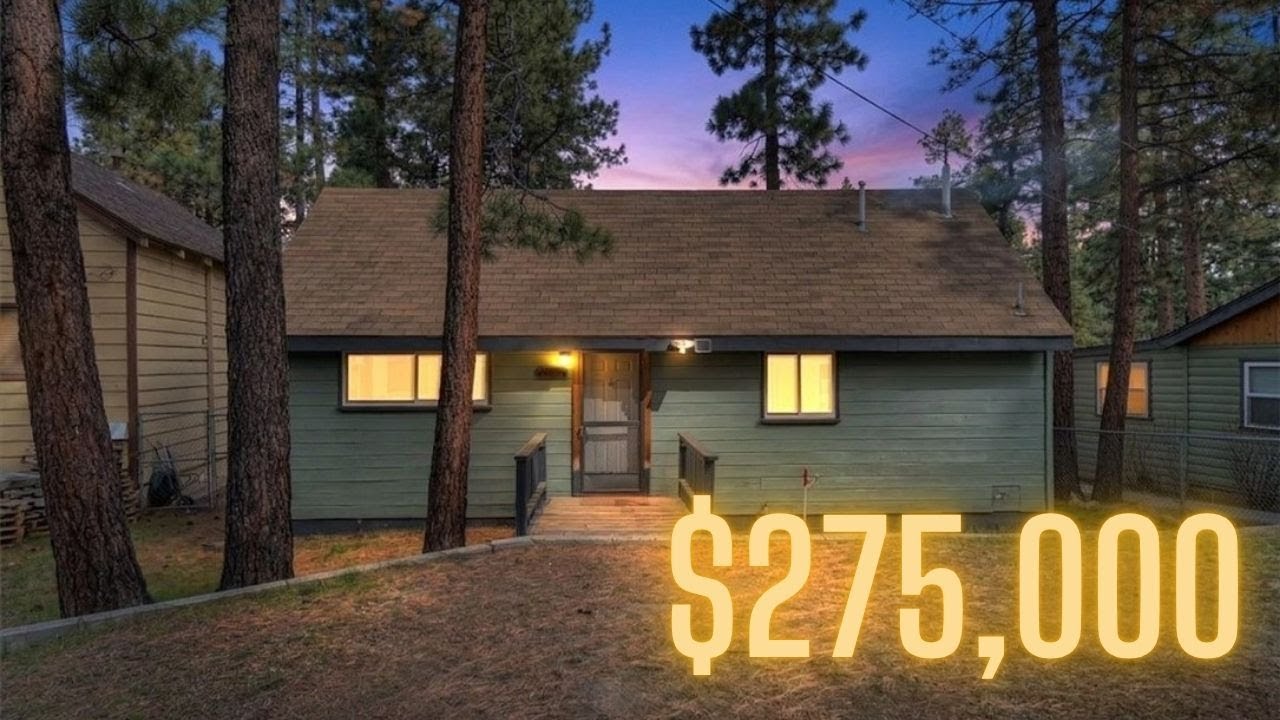
At $275,000, a two-bedroom cabin in Big Bear is genuinely hard to find. So when one came up in Poet’s Corner — a quiet residential pocket in Big Bear City — it caught my attention. I went out to 437 Booth Way to walk through it on camera so you could see exactly what you’re getting.
The short version: it’s charming, it has potential, and it has one issue that will determine whether this makes sense for you. Watch the full tour below, then read on for everything you need to know.
By Rachael Smith | May 12, 2026
A 2BR/1BA cabin in Big Bear City’s Poet’s Corner neighborhood is listed at $275,000 — well below the average Big Bear asking price. The home is 592 sq ft on a 5,700 sq ft lot, built in 1954, and sits one street off the main boulevard. The upside is real: solid bones, an updated kitchen, a wood-burning fireplace, and a walkable trail system right at the end of the block. The major catch is a non-code-compliant attic conversion that’s listed as the second bedroom but can’t legally be used as one for short-term rental. For long-term rental or a personal cabin that you treat as a one-bedroom, this property has genuine value.
You won’t find “Poet’s Corner” on any official map — it’s a local name for a cluster of streets named after famous poets. Shakespeare Street is the cross street. Booth runs through it. The pattern holds throughout the area, so locals just started calling it what it is.
The location is better than the price suggests. You’re one street off the boulevard, which means less road noise than homes that back directly onto it. Maple Hills Trail — one of the best trail systems in Big Bear — is a quarter-mile walk from the end of the block. Big Bear Lake versus Lake Arrowhead is a debate I get into often, but for trail access and quiet, Big Bear City has real advantages over more congested areas.
The lot is 5,700 sq ft — not huge, but fenced, gated, and unusually has actual grass in the backyard. Grass is uncommon up here. There’s also a deck out back and a sitting area. It’s a usable outdoor space, not just dirt and trees.
The home is 1954 construction, and it shows in the best and worst ways.
On the positive side: the rock fireplace is stunning. That kind of stonework is a signature of mid-century mountain cabins and it’s genuinely beautiful — the stone mantle goes up high, the depth looks solid, and the county would approve the width. The kitchen has been updated with granite countertops, a dual sink with garbage disposal, and the tile flooring has a stamped stone look that fits the mountain aesthetic. Buying a mountain cabin in Big Bear means learning to spot which updates actually hold up — and this kitchen does.
Flooring throughout the main living space is in good shape. No weird smells. Dual-pane windows. Tongue-and-groove ceilings that give it warmth. Compare this to what you get at $449K in Moonridge and the price-to-character ratio here is hard to beat.
Now, the things that need attention:
Want more honest Big Bear property tours like this one? Rachael walks through Big Bear homes on camera every week — covering what the listing photos don’t show and what actually matters for buyers and investors. Subscribe here to catch every new video.
This is the part of the tour that determines whether this property works for you.
The listing calls this a two-bedroom home. The second bedroom is upstairs — but you get there by ladder. Not a steep staircase. A ladder. The rise-over-run doesn’t meet code for a legal stairway, which means there’s no legal access to the upper space.
What happened here is common in older Big Bear cabins: someone converted the attic into a sleeping space, used it as a bedroom, and the home got marketed as two-bedroom. The county probably doesn’t know the square footage up there exists. The head height in the center of the space is legal. But the access isn’t.
What this means in practice:
Watch Rachael break this down at 9:59 — she explains exactly what the access issue means and how to think about it as a buyer.
I’d market this as a one-bedroom cabin — or a studio with a loft — price expectations accordingly, and be honest about the roof. At $275K, you’re buying the lot, the character, the fireplace, and the trail access. The value is real. The limitations are also real.
If you’re a buyer who wants a weekend escape for yourself and you love the aesthetic of a 1954 mountain cabin, this delivers. If you need a turnkey STR that sleeps four, this isn’t the one. If you’re handy and want a project with upside — add legal stairs to the loft, replace the roof, add a mini-split for heating and cooling — there’s a version of this property that’s worth meaningfully more than $275K.
It’s been 30 days on the market. The price is honest for what it is. The right buyer is out there — they just need to know what they’re getting into.
If you’re looking at properties in this price range in Big Bear City, check out the current Big Bear real estate market update to understand what the inventory looks like right now and whether this is a moment to move or wait.
Questions about this property or others in Big Bear City? Reach out — I’m happy to walk you through what I’m seeing in this range. And if you want to keep watching tours like this one, I’m out in the field every week.
Subscribe to the channel and you’ll get every new property tour, market update, and neighborhood breakdown as it drops. Big Bear is a small market — the good ones go fast, and knowing what you’re looking at before you walk in makes all the difference.
About Rachael Smith
Rachael Smith is a top-producing real estate agent with RE/MAX Big Bear, specializing in mountain homes, short-term rental investments, and luxury properties in Big Bear Lake and surrounding areas. With over a decade of experience and hundreds of homes sold, she helps buyers, sellers, and investors make smart, strategic real estate decisions. Through her strong online presence and data-driven approach, Rachael connects clients with opportunities both on and off the market.
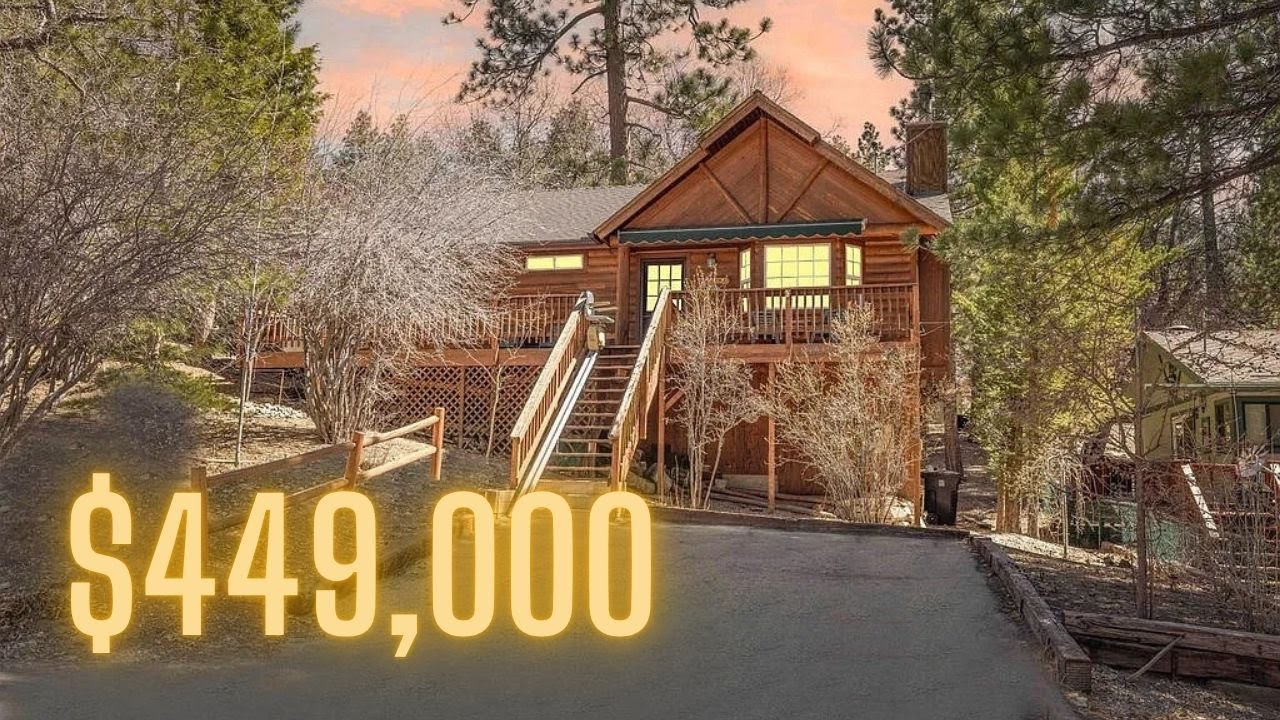
A well-maintained 2-bedroom, 2-bathroom cabin in Big Bear Lake’s Moonridge area can generate $40,000–$60,000 per year in short-term rental income — and most of them are priced under $500K. 1030 Jasper Drive is exactly that kind of property: 1,212 square feet, built in 2000, in exceptional condition, sitting on a quiet dead-end street with privacy trees and a gas fireplace you literally cannot install in new construction anymore.
By Rachael Smith | May 9, 2026
I walked this property so you don’t have to wonder. Here’s exactly what you’re getting, who it’s right for, and a few things you’d want to address before you close.
This address trips people up. 1030 Jasper Drive carries a Big Bear City zip code, but it sits right at the line where Big Bear City meets Big Bear Lake — specifically near Villa Grove, where the two communities divide. Watch the walkthrough at 0:11 and you can see exactly where the property line falls.
That zip code distinction matters for some buyers, but the location itself is excellent. Jasper is a dead-end street off Moon Ridge Road, which means you’re not dealing with through traffic. The street is quiet, there’s generous parking (multiple spots — rare for this mountain), and the surrounding trees give you real privacy without feeling remote. Snow Summit is a short drive away. Local shops, restaurants, and Big Bear Village are minutes out.
If you’re buying as a vacation rental, guests are going to love this location. If you’re buying as a second home, you’re going to love the quiet.
The home is in better shape than most comparables I’ve toured. It looks barely lived in — it’s been used as a second home, not a rental, which shows. Tongue and groove ceilings, open living-dining-kitchen layout, and good natural light throughout. The bones are solid.
The fireplace is the standout feature. Floor-to-ceiling river rock with a live edge mantel and a hidden gas starter — see it at 5:46. New construction in Big Bear can’t include gas fireplaces anymore; you’re required to go electric. So a property that already has a working gas fireplace is genuinely harder to replace than it sounds. That’s a real amenity for guests and for personal use.
The living room comfortably fits six people — which aligns with the short-term rental sleeping capacity. A bay window with built-in seating looks out at the trees, and there’s a carved beam running across the ceiling that gives the space real character without feeling overdone.
The kitchen has tile flooring (the rest of the home is carpet), a two-tiered island, and a dual cast iron sink. At 9:34, I point out that the carpet would be the first thing I’d swap out for a vacation rental — hardwood floors hold up better and photograph better. It’s not a dealbreaker, but it’s a realistic upgrade budget item.
Storage is genuinely above average for Big Bear. Most mountain cabins sacrifice storage entirely — I once bought a place up here that didn’t have a single closet. This home has storage in the kitchen, in both bathrooms, under the deck, and underneath the house (where the furnace, water heater, and extra gear can live). That matters if you’re using it as a primary residence or managing a vacation rental with supplies and linens.
Both bathrooms follow the same smart layout: the vanity/sink sits outside the enclosed toilet-and-shower area. If multiple guests are sharing a bathroom, that layout means two people can get ready at the same time without stepping on each other. Small detail, big practical difference for a rental property.
The master bedroom fits a king-size bed without feeling cramped. There’s an in-unit washer/dryer, a gated dog run in the backyard, and a deck that needs some staining and general maintenance — not structural work, just cosmetic upkeep.
Want to see more Big Bear properties like this before they hit the market — or understand what a cabin really earns as a vacation rental? Rachael breaks down property tours, investment numbers, and market strategy every week on her YouTube channel. Subscribe here so you catch every new video.
Short-term rental income potential here is $40,000–$60,000 per year. At 9:01, I walk through why that range makes sense: the location, the sleeping capacity, the price point, and the current demand in this part of Big Bear. That’s not a guarantee — rental income depends on how you manage the property, how you price it, and what shape the market’s in during your holding period. But it’s a realistic projection for a turnkey 2-bedroom in this neighborhood.
A few things worth flagging before you make an offer:
None of these are deal-killers. They’re just the kind of things you want priced into your offer or negotiated in the inspection period. If you’re buying a mountain cabin in Big Bear Lake for the first time, factoring in these post-close costs upfront is how you avoid surprises.
At $449,000 for a 2-bed, 2-bath in Moonridge with this condition and STR income potential, the pricing is competitive. The April 2026 Big Bear real estate market shows inventory is still moving — well-priced properties at this price point don’t sit long.
This property makes the most sense for three types of buyers:
If none of those describes you, it probably isn’t your house. But if one of them does, it’s worth a showing.
Want to know what this property could earn in your hands specifically, or what other Moonridge cabins are available in this price range? Reach out directly — 909.744.2190 or rachaelsmithrealestate@gmail.com. And if you’re still doing your research, the Big Bear cabin buyer’s guide is a good place to start.
New property tours go up every week on my YouTube channel. Subscribe here and you’ll see every new listing walkthrough, market update, and investment breakdown as soon as it drops.
About Rachael Smith
Rachael Smith is a top-producing real estate agent with RE/MAX Big Bear, specializing in mountain homes, short-term rental investments, and luxury properties in Big Bear Lake and surrounding areas. With over a decade of experience and hundreds of homes sold, she helps buyers, sellers, and investors make smart, strategic real estate decisions. Through her strong online presence and data-driven approach, Rachael connects clients with opportunities both on and off the market.
Quick Answer
Selling a home in Big Bear Lake, California typically costs 5.5–6% of the sale price in baseline transaction costs — agent commissions, escrow fees, owner’s title insurance, and the San Bernardino County Documentary Transfer Tax. Add in pre-listing repairs, seller concessions, and staging, and your total out-of-pocket can reach 8–10%. On a $700,000 home, that’s roughly $38,500–$70,000 coming off the top before your mortgage payoff. Your exact number depends on commission, property condition, and what the buyer asks for — which is exactly what a net sheet calculates.
By Rachael Smith-Meadors | May 7, 2026
The number one question sellers ask when they start thinking about listing is: “What’s this going to cost me?” It’s the right question — and it’s one you should answer before you sign a listing agreement, not after. The answer affects whether you list at all, what price you need, and how you plan your next move.
Here’s the full breakdown for selling in Big Bear Lake.
Commissions are your single biggest cost. After the August 2024 NAR settlement, the structure changed — offers of buyer’s agent compensation no longer appear in the MLS, and commissions are fully negotiable. There’s no longer a set standard; you and your listing agent agree on the terms before you list.
That said, most sellers in Big Bear Lake are still paying somewhere in the 4.5–5.5% range total — a listing agent fee plus whatever you decide to offer the buyer’s agent. On a $700,000 home, a 5% total commission comes to $35,000.
This is the line item with the most room to negotiate. Don’t assume the rate is fixed.
In California, real estate transactions close through an escrow company — not an attorney. The escrow company holds the earnest money deposit, coordinates the payoff of your existing mortgage, handles the distribution of funds, and manages the paperwork on both sides.
In Southern California — which includes San Bernardino County — escrow fees are typically split 50/50 between buyer and seller. The standard formula: approximately $2 per $1,000 of sale price, plus a $250 base fee. On a $700,000 transaction, the total escrow fee runs about $1,650. Your half is approximately $825.
Escrow fees are negotiable in the purchase contract.
Title insurance protects the buyer from ownership disputes, liens, or defects in the property’s title history. In Southern California — and specifically in San Bernardino County — the seller pays for the owner’s title insurance policy. This is the local custom; in Northern California, the buyer typically pays it.
Cost runs roughly $0.75–$1.00 per $1,000 of coverage. On a $700,000 sale, expect to pay $525–$700 for the owner’s policy. The buyer pays separately for their lender’s title insurance policy.
San Bernardino County charges a documentary transfer tax on all real property conveyances. The rate is $1.10 for every $1,000 of sale price — collected at the time of recording. On a $700,000 sale, that’s $770.
There’s no additional city-level documentary transfer tax in Big Bear Lake. Some California cities stack their own tax on top of the county rate — Big Bear doesn’t. The county rate is all you owe on this line item.
California sellers are required by law to provide buyers with written disclosures before closing. Most of these are forms you and your agent complete together — no direct cost, but they take time and attention. A few come with a dollar amount:
When your sale closes, the grant deed is recorded with San Bernardino County. Recording fees are minimal — typically $25–$50 for a standard residential deed.
| Cost Item | Estimated Amount |
|---|---|
| Agent commissions (5%) | $35,000 |
| Escrow fees (seller’s half) | $825 |
| Owner’s title insurance | $600 |
| Documentary Transfer Tax ($1.10 per $1,000) | $770 |
| NHD disclosure report | $100 |
| Recording fees | $50 |
| Transaction Total | ~$37,345 |
| As % of sale price | ~5.3% |
The closing disclosure accounts for every dollar that flows through escrow. But some of your biggest selling expenses happen outside of it — and they still reduce what you net.
In today’s Big Bear market, buyers have leverage. Homes are sitting an average of 73 days before going under contract. Only about 8% are selling over asking price — down significantly from prior years. The sale-to-list price ratio is running around 96.5%, meaning sellers are routinely accepting offers below list.
What that looks like in practice: buyers asking for 1–2% in closing cost credits, price reductions after inspection, or both. Budget for it. If you price expecting to net a specific number, and the buyer asks for a $10,000 repair credit or a $14,000 price reduction, your net changes.
Most buyers purchasing in Big Bear are spending $600,000 or more on a second home, vacation property, or STR investment. They’re bringing inspectors, and they’re paying attention. Deferred maintenance — aging HVAC, worn decks, damaged roofing — will surface in the inspection report and show up in negotiation leverage.
Pre-listing repair costs vary widely: $2,000–$20,000+ depending on your property’s condition. Knowing which repairs actually move the needle is part of what a good pre-listing walkthrough with your agent covers.
Big Bear Lake properties also require a Bear Valley Fire inspection as part of the sale transaction. This inspection verifies PRC 4291 compliance — cleared defensible space, ember-resistant vents, proper vegetation management. If your property needs work to pass, that work happens before close. Budget $0–$3,000+ depending on current conditions.
Mountain resort properties photograph well — or they photograph terribly. The difference is preparation. Even light staging makes a meaningful difference in how your home reads online, where buyers spend the first 90 seconds deciding whether to schedule a showing.
Expect to spend $500–$3,000 on staging and professional photography, depending on the size and condition of the property.
You’ll often see “8–10%” cited as the cost to sell a home in California. Here’s where the gap between the transaction baseline and the higher number comes from:
In a strong seller’s market with multiple offers, concessions are minimal and many sellers finish closer to 6–7% total. In the current Big Bear market — where buyers have more options and more time — plan for the higher end of that range.
On a $700,000 home, the difference between 6% and 10% is $28,000. That’s a material number that should inform your listing price, your timeline, and your expectations going in.
All of this adds up to a specific number for your property — one that depends on your sale price, your mortgage payoff, your agreed commission, your property’s condition, and what the buyer asks for during negotiations. That number is what a net sheet calculates.
A net sheet is a single page showing your projected proceeds from the sale, line by line, before you sign anything. If you haven’t seen one for your property yet, that’s where to start. Because the whole conversation about whether to list, when to list, and at what price starts with knowing your real number.
Every client I work with gets a net sheet before we even talk strategy. It’s the only way to make a clear-eyed decision about whether this is the right time to sell.
If your property is an active short-term rental, there’s one more detail worth knowing before you go to market: STR permits in Big Bear Lake do not transfer to buyers — and with the 1,500-license cap under Ord. 2023-518, new owners can’t assume they’ll qualify for one. Buyers need to know this upfront, and it affects how you position the property.
Who pays closing costs in Big Bear Lake — buyer or seller?
Both parties pay closing costs, but different ones. As a seller, your main costs are agent commissions, your half of escrow fees, and the owner’s title insurance policy (a Southern California custom — sellers pay this in San Bernardino County). Buyers cover their lender costs, their half of escrow, and their lender’s title insurance policy. The breakdown is customary but negotiable in the purchase contract.
How is the Documentary Transfer Tax calculated in San Bernardino County?
San Bernardino County’s Documentary Transfer Tax is $1.10 per $1,000 of sale price. On a $750,000 sale, that’s $825. There is no additional city-level transfer tax in Big Bear Lake — just the county rate. The tax is collected at the time of deed recording and is typically the seller’s cost.
Does the NAR settlement change how I pay my agent when selling in California?
Yes — the August 2024 NAR settlement eliminated the requirement to offer buyer’s agent compensation through the MLS. Commissions are now fully negotiable. In practice, many transactions still involve buyer’s agents, and sellers who offer competitive compensation tend to attract offers from the full pool of represented buyers. Discuss your options with your listing agent before you commit to a structure.
What is a net sheet and how do I get one before listing?
A net sheet is a one-page projection that shows your estimated proceeds — sale price minus commissions, closing costs, and your mortgage payoff. Most sellers are surprised by the gap between what they expect to walk away with and what actually arrives in their account. Any good listing agent will provide a net sheet before you sign a listing agreement. If they don’t offer one, ask for it — it’s a basic part of a professional listing consultation.
Does my short-term rental permit transfer to the buyer when I sell?
No. STR permits in Big Bear Lake do not transfer to new owners. Whether your property is in the city (zip code 92315, VRL permit) or the county (zip code 92314, STRRP permit), the buyer must apply for their own permit independently. With the 1,500-license cap under Ord. 2023-518, permit approval is not guaranteed. This is a material disclosure point for STR properties — buyers need to understand this before making an offer based on rental income projections.
Selling in Big Bear comes down to one question: what’s your number? Once you see your net sheet — tailored to your property, your loan payoff, and current market conditions — the decision gets a lot clearer.


